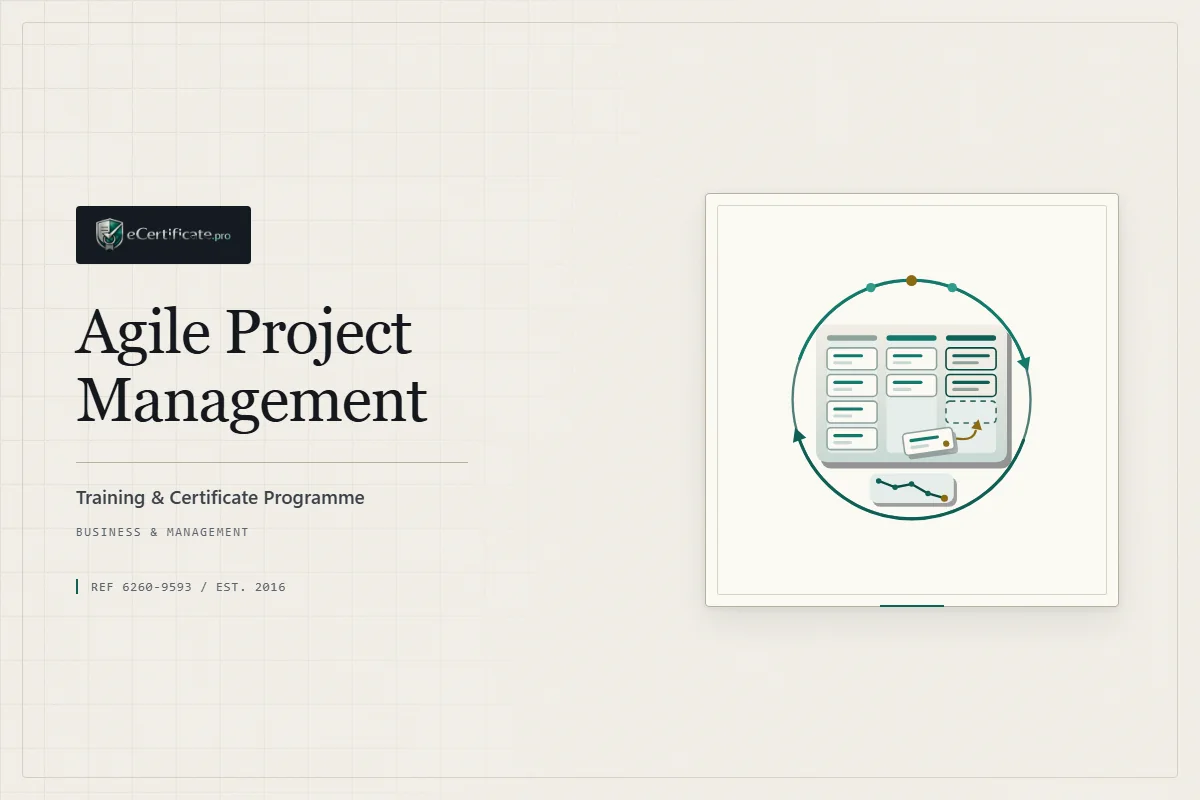
Agile Project Management Certificate
Agile, Scrum, Kanban for efficient delivery & collaboration.
EUR 299.00
Open the record

Online certificates are genuinely useful for some purposes and useless for others. Here is the honest split: what they prove, what they never replace, and how hiring teams actually read them.
An online certificate is a document from a training provider confirming that you completed a defined course and passed its assessment. ecertificate.pro is an independent online education platform, active since 2016, with 25 programs across digital marketing, data, design, IT security, business management and software platform operations. Each certificate is issued by ecertificate.pro alone, carries a unique verification code that can be queried in the ecertificate.pro database, and is delivered inside your private account rather than as an email attachment. These certificates are not government-approved, not officially accredited, and do not grant a licence, an official title or a job guarantee. They are documented proof of study: useful in the right context, useless as a replacement for a degree.
An online certificate is worth the money when you can say, in one sentence, what job it will do for you. "It proves to a hiring manager that I have already learned the reporting tool their advert lists" is a real job. "It will get me hired" is not a job — it is a hope, and no certificate delivers that on its own.
Most disappointment with online certificates comes from a category error: people buy a private training record and expect it to behave like an accredited qualification. The two look similar on paper and function completely differently.
Accreditation is external oversight. A recognised authority — a ministry of education, a national qualifications framework, a professional institute — audits the provider's curriculum, assessment integrity and record-keeping, then authorises it to award a qualification carrying legal or professional weight. That process is slow, expensive and heavily regulated, which is precisely why the result is trusted.
Regulated professions run on this: you cannot practise medicine, law or structural engineering on the strength of a laptop course. If a role requires a licence, only an accredited route reaches it.
An independent training certificate is a private record. The provider states which syllabus you studied, that you were assessed, and that you passed. Its authority ends exactly where the provider's reputation ends. It is not endorsed by a state body, and — this matters — it is not endorsed by the software vendors whose tools a course may cover. A third-party course about a company's platform is not that company's own official certification, and anyone who presents it as such is misleading an employer.
On a first read, a certificate works as a signal rather than as evidence: it tells the reader you engaged with a topic deliberately. It does not prove competence, and experienced hiring managers do not read it that way.
Where it earns real weight is later, in conversation. If the certificate topic maps onto the role and you can discuss the material fluently — what the tool does, where it breaks, what you would check first — it corroborates your claim to have prepared. If you cannot discuss it, the line becomes a liability: it invited a question you could not answer.
Two things tend to matter. Specific outperforms generic: a certificate naming an actual system or discipline reads as intent, while a vague "business skills" title reads as filler. And recency counts. A course finished last quarter signals current engagement; one from six years ago signals much less.
Buy the certificate when you are already close to the target and need to close a named gap: you have adjacent experience, but the advert lists a system you have not formally studied. Buy it when you are entering a field and need an entry point plus proof of seriousness. Buy it when your employer promotes internally and wants documented development. Buy it when the syllabus itself is the point and the document is a bonus.
Skip it when the role legally requires an accredited qualification — a private certificate cannot substitute, at any price. Skip it when you are collecting documents instead of building work; five certificates and no portfolio is a weaker application than one certificate and two finished projects. Skip it when the seller promises employment, official recognition or government approval, because that promise is false and everything around it deserves suspicion. And skip it when you would not take the course if no certificate were attached; if the learning has no value to you, the paperwork will not create any.
Our position is deliberately unglamorous. Certificates from ecertificate.pro are issued by ecertificate.pro — an independent provider, not a state authority and not an agent of any software company. We are not accredited, our documents confer no licence or official title, and we make no employment promises. Saying so costs us in marketing and saves our learners from walking into an interview with a misunderstanding.
What we do provide is a document that holds up when checked. Every certificate carries a unique verification code that can be queried in our own database — and only ours; we do not claim registration in any third company's system, because no such registration exists. Delivery runs through your private account on the platform: certificates are never sent as email attachments, you sign in to download, and every download is recorded to your account. That trail is what makes a verification check meaningful.
The catalogue spans 25 programs, from broad career subjects such as digital marketing, agile project management, UX design and cybersecurity, through to programs built around specific software platforms and their back-office tools.
Are online certificates worth it? As proof of self-directed study, as structure for learning something you actually need, and as a legitimate line on a CV that opens a conversation — yes, and at a low cost relative to the alternatives. As a shortcut to a licence, a protected title, an accredited qualification or a guaranteed job — no, and walk away from any provider suggesting otherwise.
The value is real but bounded. Know the boundary, describe the document accurately, and put the learning to work. That is what turns a certificate into something worth having.
Recognition is decided by each employer; no rule requires a company to count a private certificate. In practice, hiring teams read it as a signal of self-directed study rather than as a qualification. It helps most when the topic matches the role and you can discuss the material fluently in an interview.
No. ecertificate.pro is an independent training provider, not an accredited institution and not a state authority. Our certificates confer no licence, no official title and no legal standing. They document that you completed a program and passed its assessment, and we do not claim more than that.
A degree is awarded by an accredited institution under external oversight and carries formal academic, sometimes legal, weight. An independent online certificate is a private record of study issued on the provider's own authority. A degree can qualify you for regulated professions; an independent certificate cannot, at any price.
Yes. Every ecertificate.pro certificate carries a unique verification code that anyone can query in the ecertificate.pro database to confirm the holder's name, the program and the issue date. Verification happens only in our database; we do not register certificates with any third company or public authority, and we never claim otherwise.
No certificate guarantees employment, and any provider promising one is misleading you. A certificate can help you pass CV screening, explain a career change and supply material for an interview. The hiring decision still rests on your experience, your portfolio and how you perform in conversation.
List the exact program name, the issuing provider and the completion date under a heading such as Training or Professional Development, not under Education alongside degrees. Do not describe it as accredited or official. Accurate wording protects you when an interviewer asks a follow-up question.
Agile, Scrum, Kanban for efficient delivery & collaboration.
Learn BetConstruct back-office administration, configuration and operational workflows.
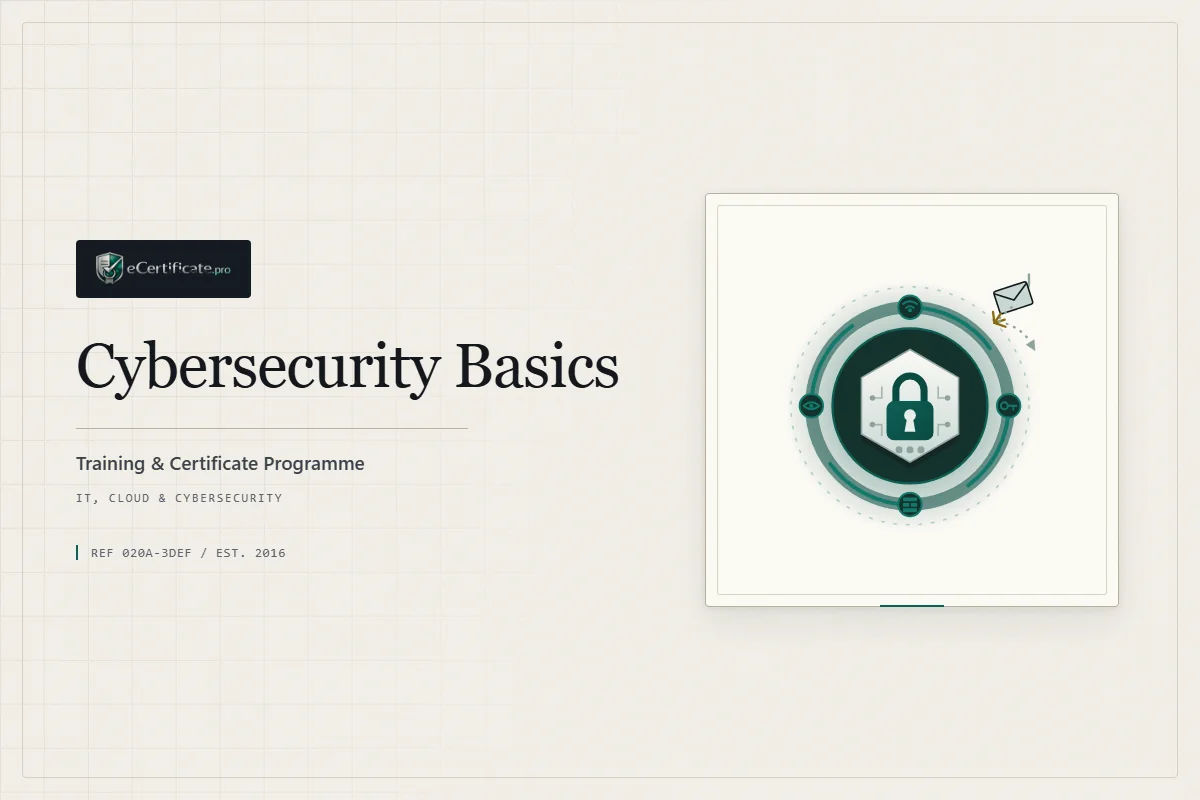
Threats, protection measures, safety best practices.
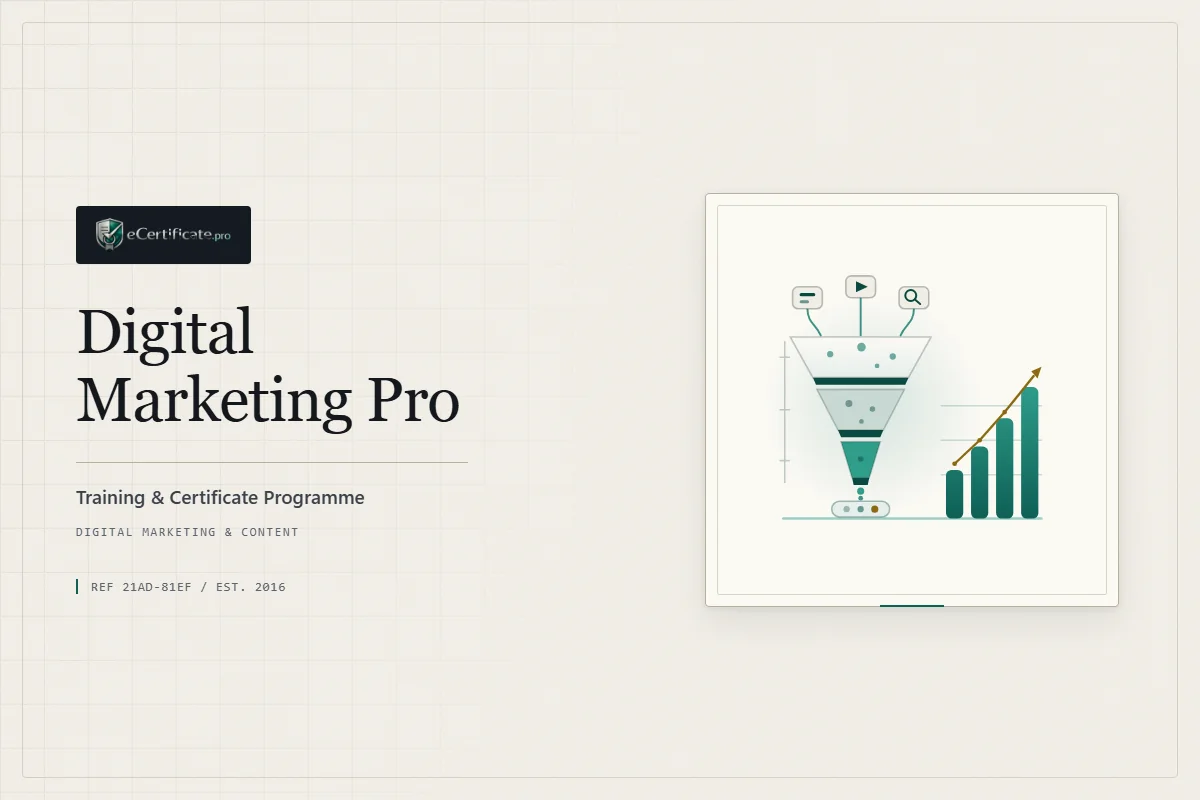
Become a certified Digital Marketing Professional. Learn SEO, SEM, Social Media, and Content Marketing.